Human Grade vs. Regular Dog Food: What's Actually Different

Here's a question worth chewing on: if you wouldn't eat it yourself, why would you feed it to your best friend?
Reading pet food labels can be confusing for many pet owners. Manufacturers like to use terms like “made with” or “organic” to make a food sound healthy, but sometimes these terms are misleading. But few pet parents know the distinction between those claims and an actual human grade food. It differs dramatically from the feed grade food that fills most bowls. The gap comes down to where ingredients come from, how food is made, how it's tested, and who's legally allowed to call their food human grade.
Once you see the difference, you can't unsee it. By the end of this article, you'll have a clear checklist to read any label with confidence and know exactly what you're feeding your pup.
What "Human Grade" and "Feed Grade" Actually Mean
For a dog food to be human grade, every ingredient must be safe for human consumption, and the entire finished product must be made in a facility licensed to produce food for people. Feed grade food is approved for animals but not people, and may legally include by-products, rendered materials, and components not fit for the human plate.
This isn't just semantics. It's a legal distinction backed by AAFCO (Association of American Feed Control Officials) and enforced by the FDA. For a food to make the claim that it’s human grade, it must meet all of the 100+ safety standards set by the Food and Drug Administration and U.S. Department of Agriculture.
According to AAFCO's official standard, every ingredient and the finished product must be stored, handled, processed, and transported in compliance with FDA regulations for human food.
This legal requirement separates marketing from accountability. If a brand can't back the claim across its entire supply chain, it can't use the words. At The Honest Kitchen, we've spent over two decades believing pets deserve real food. We were the first company in the United States to earn the right to call our food human grade, back in 2002.
That standard we pioneered then? It's still the bar we hold today.
Ingredient Sourcing: The Story Behind Every Bite
The core difference: Feed grade ingredients can legally include by-products, rendered materials, and components not fit for the human plate. Human grade sourcing requires whole, edible ingredients: the same chicken, produce, and grains you'd find at your own grocery store.
That matters because transparent sourcing means fewer surprises and more predictable quality in the bowl. Great food starts long before the kitchen.
What quality sourcing looks like
- Named whole proteins like chicken, beef, beef liver, salmon, cod, and so on. You know exactly what you're feeding. Not "meat meal," which could be anything from rendered scraps.
- Recognizable produce such as pumpkin, spinach, or sweet potato; ingredients you could cook with at home.
- Traceable suppliers who meet human-food safety rules. You can ask where it came from and get an answer.
Try this: Read a label and ask, "Could I picture this ingredient in my own pantry?" If you wouldn't serve it at your table, ask why it's in your pup's bowl.
At The Honest Kitchen, we only source from folks we trust.
- 100% of the produce we buy is non-GMO
- 88% of Whole Food Clusters' ingredients are grown in North America
- 75% of our dehydrated recipes' ingredients are grown in North America
Our turkey comes from farms we know. Our fish is wild-caught and traceable. Our sweet potatoes and pumpkins are whole produce sourced from suppliers who meet human-food standards, not byproducts or waste. That's not just a sourcing philosophy. It's how we make sure every ingredient earns its place.
Want more information on our sourcing? Check out our Ingredient Sourcing Map.
Manufacturing Facility Standards: Where Food Is Made Matters
Here's a truth that surprises most pet parents: much of the difference between human grade and feed grade happens in the facility, as well as just the ingredients.
Feed grade food is typically produced in facilities regulated for animal feed. They're robust, but the standards are built around feeding animals. Human grade food? It must be made in facilities that meet the same standards as those producing food for people. That's a significant difference in quality.
What changes in a human-food facility
- Tighter hygiene and contamination controls: every surface, every practice, audited to human-food standards
- Rigorous handling and storage protocols: ingredients tracked from arrival to finished product
- Traceability aligned with human-food safety: if something goes wrong, you can trace it back to the source
The same care that goes into the soup on your table goes into the food in your pup's bowl. That's not a small upgrade. It's a different level of accountability.
Questions worth asking any brand
- Is the food made in a human-food facility?
- What certifications or audits do they share?
- Can you trace their ingredients all the way back to their sources?
Safety Testing and Nutritional Density: Quality You Can Measure
What a robust testing program includes
- Incoming ingredient testing. Every batch checked before it enters the facility
- In-process checks for temperature, moisture, and safety at each step
- Finished-lot testing with retention samples held for verification
Nutritional density is the other half of the equation. Because human grade recipes start with whole, edible ingredients, they often deliver more usable nutrition per calorie—with less filler and fewer synthetic additives needed to hit nutrient targets.
Here's what that looks like in practice: 80% of pet parents who switch to human grade food report improved digestion within weeks. 77% notice improved energy. That's not just a cleaner ingredient list—it's their pup's body actually absorbing what they're eating.
Ask yourself: Is your dog eating a lot of food, or a lot of nutrition? Those aren't always the same thing. Watch stool quality and energy levels after any switch.
How to Shop With Confidence
Now that you know the landmarks, spotting genuine quality gets easier. Keep these signals in your back pocket:
✓ Look for a clear human grade claim, not just "premium" language
✓ Check for whole, named ingredients you actually recognize
✓ Ask whether the food is made in a human-food facility: not animal feed facility
✓ Seek transparency about testing and sourcing: they should be proud to share
✓ Real food you can pronounce is a good sign your pup is eating well
The brands worth your trust are the ones eager to show their work.
Common Questions About Human Grade vs. Feed Grade
Is human grade dog food really worth the extra cost?
That depends on what you prioritize. Human grade guarantees stricter manufacturing, traceable sourcing, and rigorous testing. Feed grade can still be nutritionally complete when made responsibly, but with less oversight. The choice comes down to how much assurance matters to you and how much you want to know about what's in the bowl.
How can I actually verify a brand's human grade claim?
Ask them three questions regarding the key components: ingredient sourcing, production, and testing.
1. Is your facility licensed to produce human food?
2. Can you trace an ingredient list to its sources?
3. What testing do you do on finished products?
Transparent, detailed answers indicate a trustworthy brand. If these answers are hard to find, it's worth a second look.
What should my dog's stool quality tell me?
Improved digestion shows up fast: firmer, smaller stools. If your pup's stool improves after switching to human grade food, it means their body is actually absorbing nutrition instead than processing filler. That's your proof.
The Honest Bottom Line
Let's tie it together. The gap between human grade dog food and feed grade food is real, measurable, and rooted in five things:
- Honest ingredient sourcing: whole, named, traceable
- Stricter manufacturing standards: human-food facility accountability
- Rigorous safety testing: pathogen checks, lot traceability, finished-product verification
- Greater nutritional density: more usable nutrition per calorie
- Defined by FDA, USDA, and AAFCO: There are clear criteria, rather than vague descriptions.
When all five line up, you're no longer guessing about quality. You go from reading labels with uncertainty to feeding with confidence.
Feed grade food can still keep your pup healthy when made responsibly. But human grade gives you assurances you can verify. You can ask questions. You can trace your pup's food back to its source.
Your dog depends on you to understand their ingredients, which is why we make ours so easy to recognize.
What Human Grade Actually Looks Like: Our Options
Clusters: Human Grade Dry Food
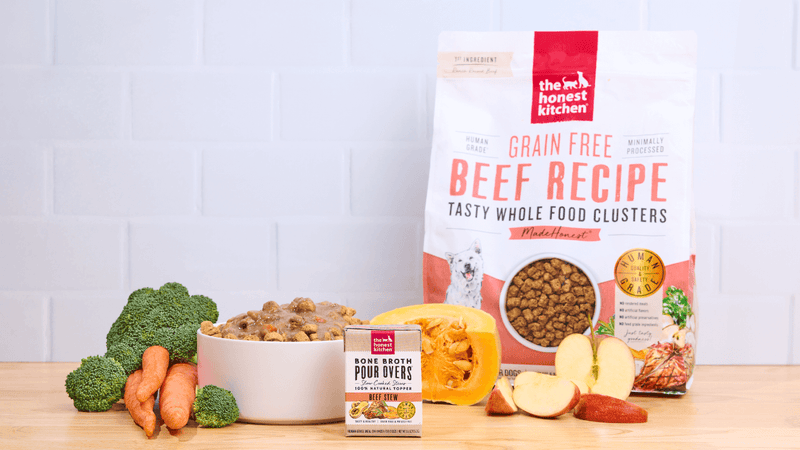
The first human grade dry food for dogs, Clusters are packed with real ingredients you can see, smell, and pronounce. Golden, roasted bites of whole-food nutrition—less processed than traditional kibble, with no by-products or synthetic nutrient boosters masking weak ingredients. Vet nutritionist-crafted. Serve as a main meal, pair with a topper, or use as training treats.
Protein Plus Clusters
This high protein recipe is crafted with human grade whole muscle and organ meats that are gently cooked to retain nutrients. Plus, it’s packed with added health benefits that help keep them feeling their best. Serve this protein-packed dry food as a full meal, pair with a topper or use them as tasty training treats.
Essential Clusters
An affordable way to feed human grade. Packed with quality protein, healthy whole grains, and the essential vitamins and minerals your dog needs to thrive, Essential Clusters makes it easy to serve a human grade meal without the premium price tag.
Wholemade™ Dehydrated Meals: Fresh Without the Fridge
Wholemade™ offers the benefits of fresh, homemade meals—real ingredients, minimal processing, and robust nutrition—in a convenient, cost-effective form. Every recipe is gently dehydrated whole-food nutrition with human grade standards you can trust. Rehydrates in minutes to four times its dry weight.
Your pup gets the digestive benefits of whole ingredients without you needing daily prep time or fridge space. Just add warm water to serve as a complete meal, a topper, or pair it with your favorite enrichment toy.
Wet Meals: Complete, Not a Treat
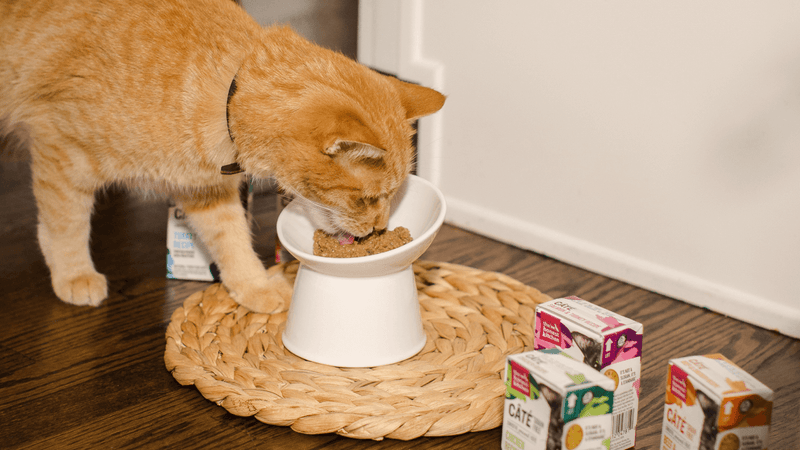
Even the pickiest pups can't resist our chef-crafted, human grade wet foods. Choose from hearty stews or smooth pates—made with high-quality protein in small batches, these kettle-cooked recipes blend health and taste in every bite. Complete and balanced, never high-heat processed.
Serve as a complete meal or use as a topper for extra taste and nutrition. Proof that human grade nutrition doesn't have to be boring: it can be delicious and hydrating too.
Ready to See the Difference?
You now know what separates human grade from feed grade. You know what to ask. You know what to look for on a label.
The Honest Kitchen's many recipes, crafted for a wide range of pup needs, put these standards into practice. Every format delivers the same human-grade assurance: whole ingredients, human-food facility standards, rigorous testing, and nutritional density your pup's body can actually use.
Start with whatever works best for your life. Shelf-stable Clusters for convenience. Dehydrated meals for fresh nutrition without the fridge. Wet meals for comfort and hydration. All human grade. All tested to the standards of food for your own table.
New to human grade? Try a 90-day money-back guarantee. Your pup deserves nothing less.